How Travel Businesses Can Reduce Decision Fatigue for Customers
Too many choices can make travel planning overwhelming. Discover how travel businesses can reduce decision fatigue through personalized recommendations, trustworthy information, simpler booking processes, and smarter travel technology with Movodream.
 Movodream Team··6 min read
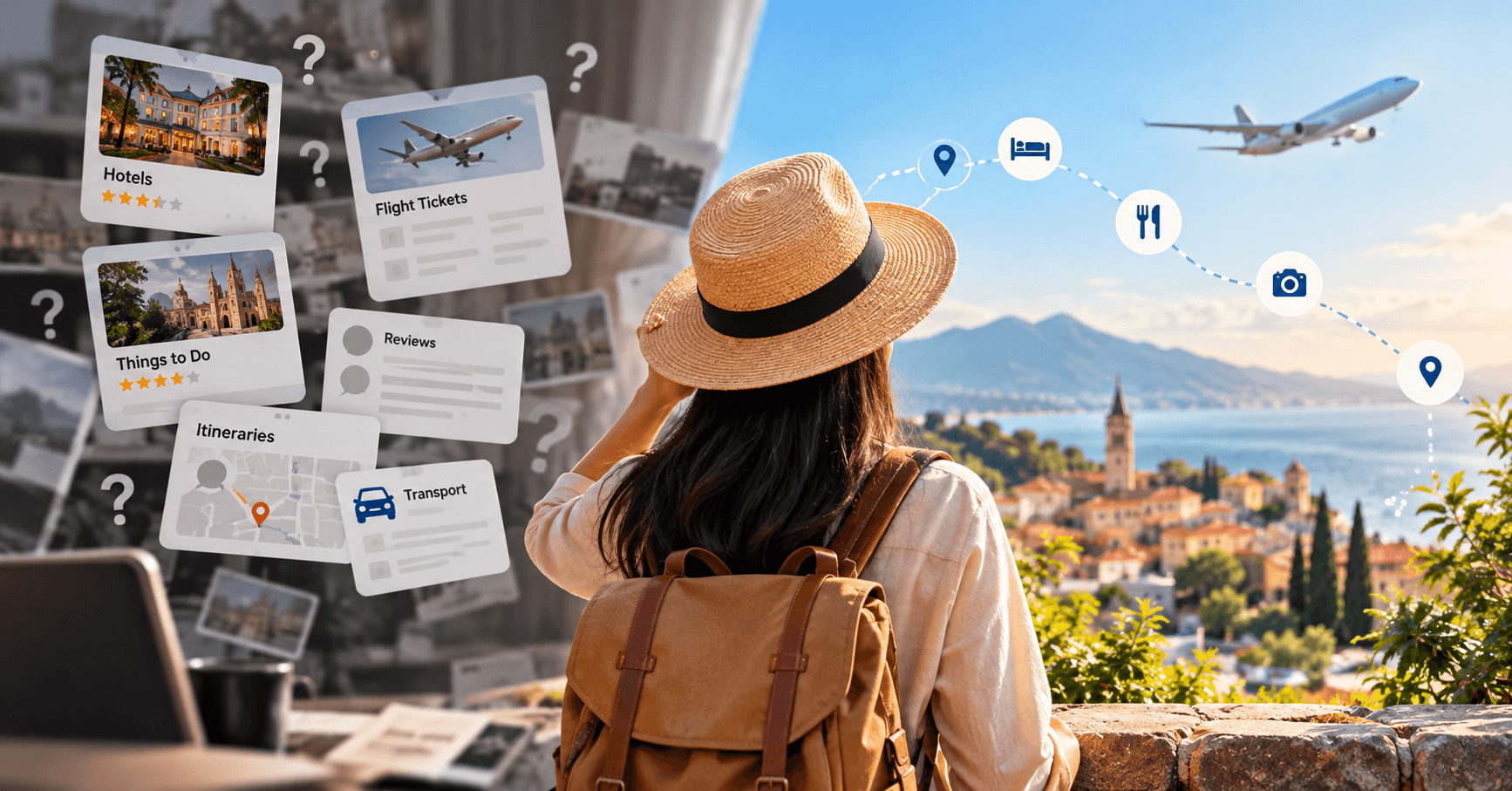
Planning a trip should be exciting, but making too many decisions can turn the experience into a stressful process. Travelers often compare hotels, browse restaurant reviews, evaluate destinations, check transportation options, and switch between multiple travel platforms before making a single booking.
This challenge is particularly relevant in today's digital travel landscape, where information is abundant but finding the right information can be difficult. Decision fatigue in travel occurs when repeated choices and information overload make it harder for travelers to evaluate options confidently.
For travel businesses, reducing this friction can improve the customer experience, support booking conversions, and encourage long-term loyalty. The goal is not simply to offer fewer services, but to help customers make better decisions with less effort.
What Is Decision Fatigue in Travel?
Decision fatigue refers to the mental strain associated with making repeated decisions. In travel, it can occur when customers compare dozens of accommodation options, evaluate conflicting reviews, or struggle to choose between competing itineraries.
Consider someone planning a weekend getaway. They find hundreds of hotels within their budget, spend hours comparing amenities, and still feel uncertain about which property to book. Eventually, they postpone the decision or abandon the booking process.
Industry research highlights the complexity of modern travel planning. According to Google's 2025 research on Indian travelers, nearly 44% of surveyed travelers take more than a week, on average, to plan and book a vacation. The finding illustrates how extended the planning journey can become, although it does not establish that decision fatigue is the cause.
Travel businesses can address this challenge by making choices clearer, more relevant, and easier to evaluate.
1. Simplify Choices With Personalized Recommendations
One of the most effective ways to reduce decision fatigue is to replace endless options with a relevant shortlist.
Instead of displaying every available hotel or activity, travel platforms can recommend options based on a customer's budget, interests, location, travel dates, and preferences.
For example, families may prioritize convenient transportation and child-friendly attractions, while solo travelers may prefer affordable stays and walkable neighborhoods.
Personalization helps customers focus on relevant options instead of comparing alternatives that do not meet their needs.
Travel businesses can implement preference-based filters, curated packages, customer profiles, and recommendation systems to make the selection process more efficient.
2. Present Information Clearly and Consistently
Travelers frequently switch between booking websites, maps, social media platforms, and review portals to compare options. Scattered information increases the effort required to make an informed decision.
Google's India travel research also identifies the fragmented nature of travel discovery. Surveyed travelers use an average of seven touchpoints for inspiration, with Google and YouTube among the leading sources. The research highlights why businesses should make information easy to understand and access across the customer journey. Source: Think with Google
Travel businesses can reduce unnecessary complexity by presenting prices, amenities, locations, cancellation policies, and customer ratings in consistent formats.
Clear information reduces comparison effort and helps travelers understand the differences between available options.
Avoid unnecessary promotional messages, confusing navigation, and hidden costs. Prioritize the information customers need to make a confident decision.
3. Build Trust Through Verified Information
Uncertainty is another major obstacle in travel planning. Customers may hesitate to book an attractive hotel or visit a recommended restaurant because they cannot determine whether the information is accurate.
Conflicting reviews, outdated listings, misleading photographs, and unexpected charges can create doubt.
Travel businesses should provide verified listings, transparent pricing, authentic reviews, accurate photographs, and regularly updated local information.
Reliable local recommendations can also help travelers evaluate unfamiliar destinations with greater confidence.
Trustworthy information reduces uncertainty and limits the need for repeated research.
Businesses should communicate limitations honestly and explain booking policies clearly instead of relying on exaggerated promises.
4. Use Technology to Reduce Planning Effort
Technology can simplify travel planning when it addresses specific customer problems rather than introducing additional complexity.
AI-powered recommendation systems, conversational search, and itinerary planners can help travelers narrow down their options based on their requirements.
For instance, a traveler could request a three-day itinerary within a specific budget, focusing on historical attractions and local cuisine. A well-designed platform could suggest suitable activities, group them by location, and account for practical considerations such as travel time.
However, technology should support decision-making rather than remove customer control. Travelers should be able to adjust recommendations, change preferences, and understand why particular options are suggested.
The objective is to reduce the work required to plan a trip, not simply add another tool to an already crowded digital environment.
5. Make the Booking Journey Shorter
Even when customers know what they want, complicated booking processes can create unnecessary friction.
Multiple forms, repeated information requests, unclear payment steps, and unexpected charges can cause customers to abandon bookings.
Travel businesses can improve the experience by offering guest checkout where appropriate, reducing repetitive form fields, displaying total prices upfront, and explaining cancellation policies before payment.
A simpler booking process helps customers move from consideration to conversion without unnecessary obstacles.
Simplicity should not come at the expense of transparency. Customers still need sufficient information to understand what they are purchasing.
6. Support Travelers After Booking
Decision fatigue does not end when a booking is confirmed. Travelers must still decide how to reach their accommodation, where to eat, which attractions to visit, and how to adjust their plans when circumstances change.
Businesses can help through pre-arrival guides, personalized itineraries, local recommendations, clear directions, and relevant notifications.
For example, a hotel could provide transportation instructions and nearby dining recommendations before arrival. A travel platform could organize activities by neighborhood to reduce unnecessary travel between attractions.
These services help customers spend less time managing logistics and more time enjoying their trips.
7. Measure the Impact of Better Decision Experiences
Reducing decision fatigue should be treated as a measurable business objective rather than simply a design principle.
Travel companies can monitor the following key performance indicators:
Conversion rate: Are more visitors completing bookings?
Booking abandonment rate: Are fewer customers leaving before payment?
Time to decision: Can customers find suitable options more efficiently?
Customer satisfaction: Do travelers report an easier planning experience?
Customer support volume: Are fewer customers requesting information that should already be available?
Businesses should evaluate these metrics together. Faster decisions do not automatically indicate a better experience if customers feel pressured or make poorly informed choices.
Conclusion
Decision fatigue is an important challenge for travel businesses operating in a world where customers have access to enormous amounts of information but often struggle to identify what matters most.
The solution lies in simplifying choices, personalizing recommendations, providing trustworthy information, streamlining bookings, and supporting travelers throughout their journeys.
The competitive advantage will not necessarily belong to businesses offering the most options, but to those helping customers make confident decisions with less effort.
This is where Movodream, a travel technology company focused on intelligent travel experiences, fits into the evolving travel landscape. Through our travel companion app, iZhinga, we aim to help travelers navigate unfamiliar destinations with greater confidence through personalized recommendations, local insights, and contextual travel assistance.
By focusing on the traveler's needs rather than overwhelming them with more information, travel technology can make planning and exploring simpler, more relevant, and more enjoyable.
Ultimately, the goal is straightforward: help travelers spend less time deciding what to do and more time experiencing the world.
Read Also :
From Travel Search to Travel Intelligence: What Comes Next?
The Future of Global Travel Experiences