AI Travel Assistants vs Traditional Travel Apps: What’s the Difference?
Travel apps have made it much easier to plan a trip. Today, travelers can book flights, reserve hotels, find restaurants, read reviews, check maps, and build itineraries from their phones. But there is still a problem.
 Movodream Team··9 min read
Travel apps have made it much easier to plan a trip. Today, travelers can book flights, reserve hotels, find restaurants, read reviews, check maps, and build itineraries from their phones. But there is still a problem.
Travelers have more information than ever, but finding the right information can still be difficult. A traditional travel app may show you hundreds of hotels, restaurants, attractions, or activities. But how do you know which one actually fits your needs?
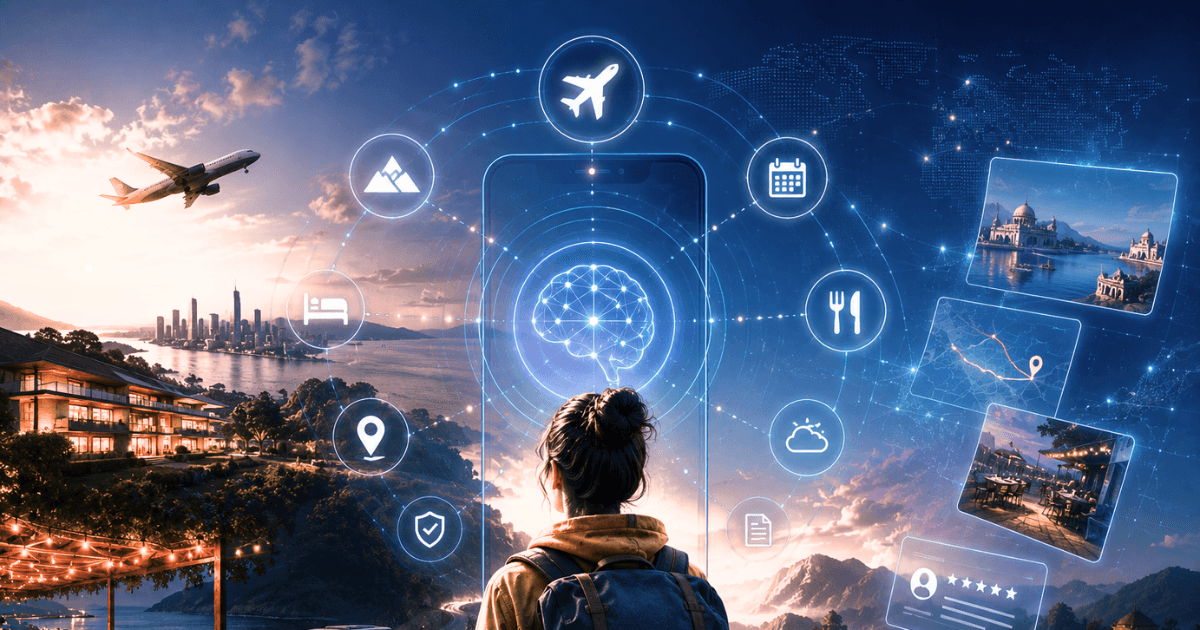
This is where AI travel assistants are changing the way people plan and experience travel. Instead of simply helping travelers search and book, AI-powered travel assistants can understand preferences, context, and changing situations to provide more personalized travel recommendations.
But does this mean traditional travel apps are becoming outdated? Not exactly. The future of travel is likely to combine the strengths of both.
What Is a Traditional Travel App?
A traditional travel app is designed to help users complete specific travel tasks. Depending on the platform, these tasks can include:
· Booking flights
· Reserving hotels
· Finding restaurants
· Reading travel reviews
· Checking maps and directions
· Booking activities
· Comparing prices
· Managing travel reservations
Most traditional travel apps work around a simple process:
Search → Filter → Compare → Book
For example, if you search for “hotels in Delhi under ₹5,000,” the app can show you available hotels based on factors such as price, location, rating, and availability.
This model works well when you already know what you want. The problem starts when you don't. A traveler may know that they want a good place to stay, eat, or explore, but they may not know exactly what to search for. That's where AI travel assistants offer a different approach.
What Is an AI Travel Assistant?
An AI travel assistant uses artificial intelligence to understand a traveler's requests and provide more personalized assistance. Instead of searching for every part of a trip separately, travelers can describe what they want in normal language.
“I'm visiting Jaipur for three days. I like history and local food, but I don't want to spend most of my day travelling between places.”
This request includes several preferences at once.
· Destination
· Trip duration
· Interests
· Food preferences
· Travel preference
An AI travel assistant can use this context to help create a more relevant travel plan. This represents a shift from search-based travel to context-based travel assistance.
AI Travel Assistants vs Traditional Travel Apps
So, what is the actual difference between the two?
1. Search vs Conversation
Traditional travel apps usually require users to search for specific things.
You might search:
· “Best restaurants in Mumbai”
· “Hotels near the airport”
· “Things to do in Goa”
· “Places to visit in Delhi”
An AI travel assistant can understand a more natural request.
“I have two hours before my flight. I'm near the airport and want somewhere good to eat without travelling too far.”
The difference is important, Traditional apps focus on what you search for. AI travel assistants can focus on what you are trying to achieve.
2. More Options vs More Relevant Options
Travel platforms can give users thousands of options. But more options do not automatically mean better decisions. Imagine searching for restaurants in a new city. You may find hundreds of highly rated places. But your ideal restaurant could depend on several things:
· Your budget
· Your location
· Your food preferences
· How much time you have
· Whether you are travelling alone or with family
· Whether you want a tourist-friendly or local experience
AI travel assistants can take these factors into account when generating recommendations. The goal is not to give travelers the longest list. The goal is to reduce the effort needed to find the right option.
3. Trip Planning vs Real-Time Travel Assistance
Traditional travel apps are particularly useful when planning a trip. You can book your flight, hotel, transport, and activities before leaving home. But travel does not always follow the original plan.
· A flight can be delayed.
· The weather can change.
· A restaurant may be closed.
· Traffic can become unexpectedly heavy.
· You may suddenly have a few free hours.
This is where an AI travel assistant can become useful. “It's raining and my outdoor plans are cancelled. What can I do nearby for the next three hours?” The ability to respond to changing circumstances is one of the key opportunities for AI travel technology.
4. Information vs Context
Traditional travel apps are very good at providing information. But information without context can become overwhelming.
For example:
“Best places to visit in Amritsar”
will produce many results.
But consider:
“I'm near the Golden Temple, travelling with my parents, and have four hours before dinner. What should we visit without spending too much time travelling?”
The second request provides context. An intelligent travel assistant can use details such as location, time, interests, and travel companions to make recommendations more useful. This is one of the biggest changes AI can bring to travel: from information discovery to contextual decision-making.
5. Multiple Apps vs One Travel Assistant
A typical traveler may use several apps during a trip.
· One for flights.
· One for hotels.
· One for maps.
· One for restaurants.
· One for activities.
· One for weather.
· One for reviews.
This creates a fragmented travel experience. An AI travel assistant can potentially bring different travel questions into one conversation. Instead of switching between multiple platforms, a traveler can ask questions based on what they need at that moment. This does not mean AI will replace every travel app. Instead, AI can become a layer that helps travelers connect information from different parts of their journey.
Why Personalization Matters in Travel
Personalization is becoming one of the most important areas of modern travel technology.
Two people can visit the same city and want completely different experiences.
One traveler may want famous attractions, nightlife, and busy markets.
Another may prefer local food, quiet places, cultural experiences, and less crowded areas.
A generic recommendation cannot fully satisfy both.
This is why AI travel assistants have an important role to play.
By understanding a traveler's preferences and context, an AI-powered travel app can potentially make recommendations more relevant.
The future is not about finding the most popular place. It is about finding the right place for the right traveler.
Where Does Movodream Fit Into This?
This is the problem Movodream is built around.
Travelers arriving in a new city often have access to plenty of information.
The bigger challenge is knowing:
· What should I do?
· Where should I go?
· What can I trust?
· What is actually worth my time?
· What should I do if my plans change?
Movodream approaches travel as more than a booking or search experience.
The idea is to create an intelligent travel companion that can support travelers throughout their journey.
Its focus is particularly relevant to the moments when travelers feel uncertain in an unfamiliar city.
Every city is new. You don't have to feel new.
This means helping travelers move from simply discovering places to feeling more confident about the decisions they make in a city.
AI + Local Knowledge
AI can make travel recommendations more personalized, but technology alone does not solve every travel problem.
Local knowledge still matters.
· Which market is genuinely worth visiting
· The best time to visit a busy attraction
· Which restaurant locals actually prefer
· Which areas to avoid at certain times
· What tourists commonly miss
· Which online recommendations are overrated
This is where Movodream's Local Guru concept becomes important. The idea combines technology with human-verified local knowledge. AI can help understand the traveler.
Local knowledge can help understand the destination. Together, these can create a more useful travel experience.
Is an AI Travel Assistant Better Than a Traditional Travel App?
Not necessarily. It depends on what you are trying to do. Traditional travel apps remain extremely useful for:
· Flight booking
· Hotel booking
· Price comparison
· Availability
· Reviews
· Maps
· Payments
· Managing reservations
AI travel assistants are more useful for tasks involving:
· Personalized planning
· Recommendations
· Natural-language searches
· Changing travel plans
· Context-based decisions
· Discovering experiences
· Real-time travel assistance
The two technologies do not have to compete. They can work together. Traditional travel apps provide the services. AI travel assistants provide intelligence and context. Local knowledge provides real-world insight. That combination could define the next generation of travel technology.
What Is the Future of AI in Travel?
The travel industry is moving toward more personalized and intelligent experiences. Future AI travel assistants may become better at understanding:
· Traveler preferences
· Location
· Time
· Weather
· Budget
· Previous activities
· Travel companions
· Real-time changes
This could make travel planning less about searching through endless options and more about getting useful recommendations at the right moment. The biggest opportunity for AI in travel is not simply automation.
It is reducing uncertainty. When travelers enter a new city, they should not have to spend hours researching every decision. Technology should help them spend less time searching and more time experiencing the destination.
Frequently Asked Questions
What is an AI travel assistant?
An AI travel assistant is a technology that uses artificial intelligence to help travelers plan trips, discover places, make recommendations, and respond to travel-related questions using natural language and context.
How is an AI travel assistant different from a travel app?
Traditional travel apps generally focus on specific services such as booking flights, hotels, finding restaurants, or navigation. AI travel assistants focus more on understanding the traveler's needs and providing personalized assistance.
Can AI plan an entire trip?
AI can help create itineraries, suggest destinations, recommend activities, and organize travel plans. However, travelers should still verify important information such as booking availability, opening hours, prices, and travel requirements.
Can AI help during a trip?
Yes. AI can be useful during a trip for recommendations, itinerary changes, finding nearby places, answering questions, and helping travelers respond to unexpected situations.
Why is local knowledge important for AI travel?
AI can process and organize large amounts of information, but local knowledge can provide practical insights that may not be obvious from online data. Combining AI with verified local knowledge can make travel recommendations more useful.
Final Thoughts
Traditional travel apps solved an important problem: they made travel information, bookings, maps, and reviews easily accessible. AI travel assistants are addressing the next problem: How do we make better travel decisions with all this information? The difference can be summed up simply:
Traditional travel apps help you find things. AI travel assistants help you decide what makes sense. Movodream is built around this shift combining intelligent travel assistance with contextual recommendations and human-verified local knowledge.
Because the best travel experience is not necessarily the one with the most information. It is the one where you feel confident about what to do, where to go, and what to trust. And that is where the next generation of travel technology is heading.